A 50/50 raffle is the most forgiving fundraiser format there is: you do not buy a prize, you do not guess how much inventory to move, and the pot grows on its own as people buy in. Half of everything collected goes to the winner and half stays with your cause, so the appeal to buyers is obvious and the math never puts you underwater. The catch is that the whole thing runs on the tickets, and a 50/50 uses a very specific kind of ticket in a specific way. This guide walks through how the format actually works at the table and what to order so the drawing is clean, fast, and defensible.
Why a 50/50 needs a two-part ticket
Every 50/50 depends on one physical fact: the buyer and the drum need to hold the same number. That is what a double roll ticket provides. Each ticket on the roll is really a matched pair printed with an identical unique number, perforated so it tears into two halves. One half goes into the bucket or drum, the other goes into the buyer’s pocket, and the matching numbers are what let you call a winner without keeping a list. A single roll, by contrast, is a continuous strip with no retained stub; it is fine for drink or admission tickets where nobody needs to prove they hold a number, but it cannot run a drawing. If you take one thing from this page, it is that a 50/50 is a double-roll event, not a single-roll one.
Rolls, counts, and sizes
Roll tickets are sold by the roll, and the workhorse size is a double roll of 2,000 two-part tickets, sequentially numbered so no two pairs collide. Physically the tickets are small, commonly around two inches on a side for a double stub, which is what lets a roll hold so many. Rolls come in a range of colors, and that color is not decoration; it is inventory control. Running each price tier or each seller on a different color lets you keep numbers from overlapping and makes it obvious at a glance which batch a stub came from. Order at least one distinct color per concurrent selling scheme you plan to run.
Estimating how many tickets to stock is the one piece of planning worth doing in advance. A reasonable starting assumption is that motivated buyers take roughly ten tickets each once bundle pricing is in play, though your real number depends on the crowd and the pot.
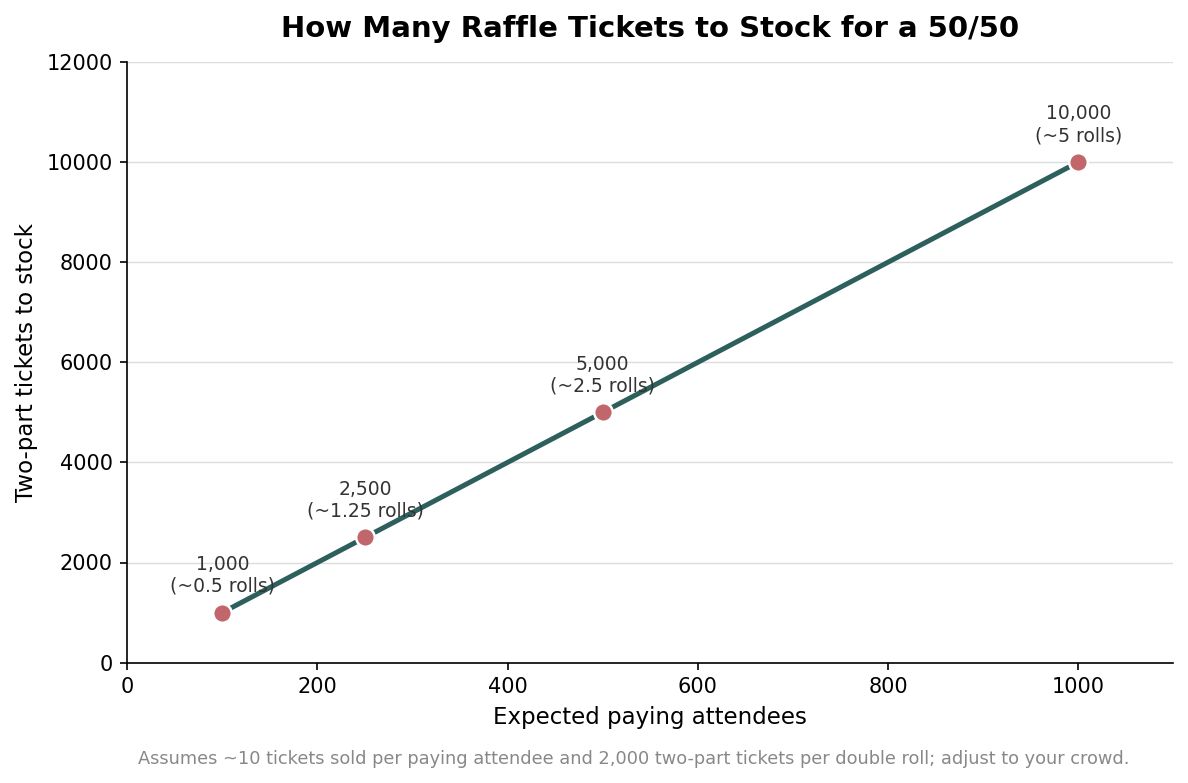
The chart translates expected paying attendance into tickets and rolls at that assumption. A 250-person event lands near a single roll and a 500-person event near two and a half. When in doubt, buy the next full roll up; unused sequential tickets keep for the next event, whereas running out mid-evening kills momentum at exactly the moment the pot is most attractive.
Price the tickets in bundles
Nearly every successful 50/50 sells in tiers rather than one ticket at a time, because bundles raise the average sale without feeling like a hard push. A common structure is a single ticket at one price, a small handful at a modest discount, and a larger stack at the best per-ticket rate, often stretched out as an arm’s length of tickets for a round number.
The effect is to lower the effective price per ticket as buyers step up, which both feels like a deal and puts more numbers in the drum. Set your own ticket prices to match what your crowd will bear and, importantly, to stay within any legal caps your jurisdiction places on raffle ticket prices. What matters is the shape: give buyers an easy reason to move from one ticket to a stack.
Run the sale and the draw so it holds up
On the night, position sellers where the crowd naturally pools and have them carry an apron with cash on one side and the buyer’s halves on the other, dropping every matching stub straight into the drum as they go. Keep selling until the announced cutoff, then tumble the drum thoroughly and draw in full view of the room. Read the winning number aloud and slowly, twice, and have the winner match their half against the drawn stub. Because the pot is only known once sales close, announce the final total before you draw so the number in the drum and the number on the check are one and the same. A drawing that anyone in the room could have watched and verified is the whole point of using matched-number tickets in the first place.
Know the rules before you print
Raffles are games of chance, and in most places they are regulated. Depending on where you operate, running one may require that the organization be a registered nonprofit, hold a gaming or raffle license, cap ticket prices or total pot size, or restrict who may sell and who may buy. None of that is printed on a stock roll, so it is on you to confirm what your state and municipality require before the event, not after. This is general information rather than legal advice; check your local gaming authority or a qualified advisor for your specific situation. Get the compliance question answered first, then order your rolls, and the format does the rest.